Sunday, October 11, 2009

Chomsky Book BANNED @ Guantanamo


Professor Noam Chomsky may be among America's most enduring anti-war activists. But the leftist intellectual's anthology of post 9/11 commentary is taboo at Guantanamo's prison camp library, which offers books and videos on Harry Potter, World Cup soccer and Islam.


U.S. military censors recently rejected a Pentagon lawyer's donation of an Arabic-language copy of the political activist and linguistic professor's 2007 anthology "Interventions" for the library, which has more than 16,000 items.


Chomsky, 80, who has been voicing disgust with U.S. foreign policy since the Vietnam War, reacted with irritation and derision. "This happens sometimes in totalitarian regimes,'' he saod by e-mail after learning of the decision.


"Of some incidental interest, perhaps, is the nature of the book they banned. It consists of op-eds written for The New York Times syndicate and distributed by them. The subversive rot must run very deep.''


Prison camp officials would not say specifically why the book was rejected but Navy Lt. Cmdr. Brook DeWalt, a Guantánamo spokesman, said staff reviews "every proposed or recommended library item to assess force protection issues associated with camp dynamics -- such as impact on good order and discipline.''


The banned book showed the bespectacled professor-emeritus at the Massachusetts Institute of Technology in button-down shirt and sweater staring out of a black cover of a 2007 edition printed by a Beirut publishing house.


A rejection slip accompanying the Chomsky book did not explain the reason but listed categories of restricted literature to include those espousing "Anti-American, Anti-Semitic, Anti-Western'' ideology, literature on "military topics,'' and works that portray "excessive graphic violence'' and "sexual dysfunctions.''


The list of approved material includes poetry, fiction, art, math, history, religion, politics and current events.


A Pentagon defense lawyer sent the book to Ali Hamza al Bahlul, a confessed al Qaida member who had worked as Osama bin Laden's media secretary in Afghanistan at the time of the Sept. 11, 2001 attacks.


A military jury convicted Bahlul, 40, of soliciting murder and conspiracy and sentenced him to life in prison in November for creating al Qaida propaganda. The key evidence was a two-hour video he made by splicing fiery bin Laden speeches with Muslim bloodshed and stock news footage of the aftermath of the October 2000 suicide bombing of the USS Cole off Aden, Yemen.


Bahlul is currently the lone war crimes convict at Guantanamo, where the prison camps commander ordered him separated from the other 245 war-on-terror captives at the U.S. base in Cuba under an interpretation of the Geneva Conventions that forbids holding detainees with convicted prisoners. Two earlier convicts were sent back to their native countries, Australia and Yemen, and are now free after serving short sentences.


Prison camp staff would not say how many donated books have been refused.


But DeWalt said detainees are forbidden from receiving gifts of books as personal property. Instead, he said, books sent to the captives are evaluated for their suitability for the library -- a trailer where Defense Department staff have catalogued a collection that recently ballooned to more than 16,000 books, magazines and videos even as the Pentagon is downsizing the prison camp population.


President Barack Obama has ordered the prison camps closed by early next year, a deadline the White House now says it may miss.


Meantime, staff there say quality-of-life improvements will continue until the last detainee is gone.


The library is also a featured stop on weekly tours for reporters, members of Congress and other invited guests brought to the sprawling prison camp compound in a Pentagon bid to demonstrate that the much-maligned detention center is "safe, humane and transparent.''


Library staff have since 2005 described the Harry Potter series as a borrowing bestseller among the mostly devout Muslim population -- and shown off translated versions in the stacks that separate Arabic from Urdu, French from Farsi and cover more than a dozen languages.


Other reportedly popular items include old World Cup soccer playoff videos, a French cuisine cookbook published in Beirut and scholarship on the Koran, pre-screened to make sure they contain mainstream messages.


For a time, Richard Nixon's "Victory Without War" flew off the shelves, a librarian reported. So much so that alleged 9/11 mastermind Khalid Sheik Mohammed referred to it during a war court hearing earlier this year.


But not Chomsky, who in recent years got high-profile plugs from two of America's most ardent adversaries.


In September 2006, Venezuelan President Hugo Chavez held up Chomsky's 2003 "Hegemony or Survival: America's Quest for Global Dominance" in a speech at the United Nations that also likened President George W. Bush to Satan, and gave the book a bump in sales for several weeks.


A year later, bin Laden popped up in a keep-the-faith video address to his followers that proved he was alive and ridiculed the U.S. invasion of Iraq while praising the professor's "sober words of advice prior to the war.''


DeWalt said "force protection reasons'' barred him from explaining why any title or author was banned but said as of this week there were no Chomsky works of any type at the Guantanamo library in any language.

Wednesday, October 07, 2009

Librarians fight back against cuts with 'good library guidelines'


New guidelines say that a good library should be accessible, with opening hours which suit local needs, and with regularly refreshed print, audio-visual and online resources
Public library in north London
Good libraries should be accessible and well-stocked, according to new guidelines from CILIP, the Chartered Institute of Library and Information Professionals

With the prospect of closure threatening up to a third of the UK's libraries, a group of librarians have put together a set of guidelines to help the sector address its problems.

The guidelines were launched at today's public library authorities conference in Bristol by CILIP, the Chartered Institute of Library and Information Professionals, whose chief executive Bob McKee estimated that there were problems of "varying degrees of severity" at as many as 50 of the 150 public library authorities in the UK.

The CILIP guidelines include the provisions that a good library should be accessible, with opening hours which suit local needs, and with regularly refreshed print, audio-visual and online resources. Staff should be knowledgeable and well-trained, and involved in the local community – especially encouraging those unable or unwilling to visit the library to join.

McKee said that it would be increasingly important that libraries and local authorities understand what is expected of them with the prospect of cuts in the government settlement for the next financial year.
"We know it's going to be a tough spending round and the danger is that if libraries' statutory provision is defined in weak terms, and education and social care are defined in strong terms, then libraries will be squeezed. I've been involved in four government reviews of public library service. Two during the Thatcher/Major years and two during the Blair/Brown years and none of them have managed to produce a clear and comprehensive statement of what is expected of public library provision," said McKee.

He pointed to the situation in the Wirral, where the council's plans to close 11 libraries were dropped last week following local campaigns and a public enquiry. "That's a welcome move, but the financial problems faced by Wirral and other local councils won't go away," he said. "Clear guidance is needed on what local councils are expected to provide in their role as public library authorities ... We hope that the CILIP guidelines will help to provide that clarity and leadership."

Monday, October 05, 2009

Scanning the Horizon of Books and Libraries, by Amy Goodman

Posted on Sep 29, 2009

By Amy Goodman

A battle is raging over the future of books in the digital age and the role that libraries will play. One case now before a U.S. federal court may, some say, grant a practical monopoly on recorded human knowledge to global Internet search giant Google. The complex case has attracted opposition from hundreds of individuals and groups from around the planet.
Google announced in 2004 its plan to digitize millions of books and make them available online. Books in the public domain would be made freely available. Newer books, published since 1923 and for which copyright still exists, would still be online, but viewable only in what Google called “snippets.” Two groups, The Authors Guild and the Association of American Publishers, sued, alleging copyright violations. In October 2008, the groups and Google announced a settlement to the lawsuits, dubbed the “Google Book Settlement” (GBS). Google would pay $125 million and create the Books Rights Registry, a new organization that would direct funds from the settlement, and future revenue from book sales, to the copyright holders. Google would be empowered to not only display works, but also to become a massive, online electronic bookstore.


The settlement grants Google, automatically, permission to scan, display and sell books that are still in copyright but are deemed “out of print,” and for which the copyright holder cannot be easily found. These are referred to as “orphan works.” The status of orphan works has been the subject of much debate, and legislation has been proposed to make orphan works more available to the public. The GBS gives Google, and only Google, the legal right to digitize and sell these works.


UC Berkeley Law professor Pamela Samuelson wrote recently, “The Google Book Search settlement will be, if approved, the most significant book industry development in the modern era ... [and] will transform the future of the book industry and of public access to the cultural heritage of mankind embodied in books.”


Brewster Kahle co-founded the Internet Archive, a digital library aspiring to provide “universal access to human knowledge.” It houses 150 billion Web pages, 200,000 movies, 400,000 audio recordings and more than 1.6 million texts. Kahle opposes the GBS. Google scans large library holdings and returns to each library digital versions viewable only on a limited number of computer terminals that Google provides.


I asked Kahle how he sees the future of libraries. “Libraries as a physical place to go, I think will continue,” he said. “But if this trend continues, if we let Google make a monopoly here, then what libraries are in terms of repositories of books, places that buy books, own them, be a guardian of them, will cease to exist. Libraries, going forward, may just be subscribers to a few monopoly corporations’ databases.” Kahle’s version of the digital library, which he and others are building collaboratively, is open and shareable, without strings attached as with Google’s deal. Kahle co-founded the Open Book Alliance, which filed an opposition to the GBS, equating the settlement with oil price-fixing schemes set up by railroad barons and John Rockefeller’s Standard Oil in the 1870s.


After Judge Denny Chin, who is presiding over the case, called for public comment, opposition began flooding in from around the globe, from sources ranging from the governments of France and Germany to scores of publishers and authors and artists including folk singer Arlo Guthrie and author Julia Wright, daughter of Richard Wright, who wrote the classics “Black Boy” and “Native Son.” Marybeth Peters, head of the U.S. Copyright Office, called it an “end run around legislative process and prerogatives.” Judge Chin proposed a “fairness hearing” for Oct. 7 to decide on the Google Book Settlement.


On Sept. 18, the U.S. Department of Justice filed an opposition brief. It read, in part, “the breadth of the Proposed Settlement—especially the forward-looking business arrangements it seeks to create—raises significant legal concerns. ... A global disposition of the rights to millions of copyrighted works is typically the kind of policy change implemented through legislation, not through a private judicial settlement.” Judge Chin announced a delay of the hearing. The Open Book Alliance, along with many others, applauded the delay and is calling for an open, transparent process going forward to deal with the future of book digitization and the issue of orphan works in a way that best benefits the public interest.
 
Denis Moynihan contributed research to this column.
 
Amy Goodman is the host of “Democracy Now!,” a daily international TV/radio news hour airing on more than 800 stations in North America. She is the author of “Breaking the Sound Barrier,” recently released in paperback.

Tuesday, September 29, 2009

Banned Books Week - September 26−October 3, 2009

Banned Books Week: Celebrating the Freedom to Read

September 26−October 3, 2009

Banned Books Week (BBW) is an annual event celebrating the freedom to read and the importance of the First Amendment. Held during the last week of September, Banned Books Week highlights the benefits of free and open access to information while drawing attention to the harms of censorship by spotlighting actual or attempted bannings of books across the United States.

Intellectual freedom—the freedom to access information and express ideas, even if the information and ideas might be considered unorthodox or unpopular—provides the foundation for Banned Books Week. BBW stresses the importance of ensuring the availability of unorthodox or unpopular viewpoints for all who wish to read and access them.

The books featured during Banned Books Week have been targets of attempted bannings. Fortunately, while some books were banned or restricted, in a majority of cases the books were not banned, all thanks to the efforts of librarians, teachers, booksellers, and members of the community to retain the books in the library collections. Imagine how many more books might be challenged—and possibly banned or restricted—if librarians, teachers, and booksellers across the country did not use Banned Books Week each year to teach the importance of our First Amendment rights and the power of literature, and to draw attention to the danger that exists when restraints are imposed on the availability of information in a free society.

Banned Books Week is sponsored by the American Booksellers Association; American Booksellers Foundation for Free Expression; the American Library Association; American Society of Journalists and Authors; Association of American Publishers; and the National Association of College Stores. It is endorsed by the Center for the Book in the Library of Congress.

For more information on getting involved with Banned Books Week: Celebrating the Freedom to Read, please see Calendar of Events and Ideas and Resources. You can also contact the ALA Office for Intellectual Freedom at 1-800-545-2433, ext. 4220, or bbw@ala.org.

Banned Books Week Video: Puppet Book Banners

To kick off Banned Books Week 2009, our new Banned Books Week PSA featuring the puppets from “Crash Pad” is out! Watch as Chad, Rustle, and Mooch misinterpret the meaning of Banned Books Week and Herb comes to the rescue. Also check it out at AL Focus.

Banned Books Week Read-Out! in Chicago, IL, on September 26

The American Library Association, the McCormick Freedom Museum, and the Newberry Library invite you to join us along with ALA President Camila Alire and frequently challenged author Chris Crutcher, in a FREE event to celebrate your freedom to read! The Banned Books Week Read-Out! will take place Saturday, September 26, from noon to 2:00 PM [...]

New Book Censorship Map Reveals National Problem

Have you ever wondered where challenges to books in the United States actually occur? A new book censorship map featured on the BannedBooksWeek.org site illustrates that censorship efforts take place all across the country. The Google map displays more than 120 book challenges—from Maine to Florida and from Long Island, New York, to San Francisco, [...]

Tuesday, September 22, 2009

The menace of the public [library] option

by M.C. Blakeman

Saturday, September 19, 2009

Of all the current assaults on our noble republic, perhaps none is more dangerous than the public option - specifically, the public library option.
For far too long, this menace has undermined the very foundations of our economy. While companies like Amazon and Barnes & Noble struggle valiantly each day to sell books, these communistic cabals known as libraries undercut the hard work of good corporate citizens by letting people read their books for free. How is the private sector supposed to compete with free? And just what does this public option give us? People can spend hours and hours in these dens of socialism without having to buy so much as a cappuccino. Furthermore, not only can anyone read books for free in the library, they can take them home, too. They get a simple card that can be used at any library in town. No checking on the previous condition of books they've read. No literacy test. Nothing. Yet, do these libertines of literature let you choose any book you want, anytime you want it? No. Have you ever tried to get the latest best-seller at a public library? They put you on a waiting list for that, my friend. And if you do ask these government apparatchiks a question about a book, they start talking your ear off, and pretty soon they're telling you what to read.
Of course, if you break one of their petty rules and return a book late, you have to pay fines that mount grotesquely each day. Even if you die, your overdue fees keep piling up. Is that not a death tax? How long must the elderly live in fear of burdening their children with these unfair sanctions on their estates?
Don't be fooled for a minute. Somebody has to pay for these "free" libraries, and I'll tell you who it is, pal. Those good ol' suckers, the American taxpayers, that's who.
Have you ever wondered who's really behind this public library option? And don't you think it's fishy that they mask their nefarious activities with benign-sounding names, like Friends of the Library? What's their real agenda - and why do they have so many "volunteer" meetings, anyway?
No, my fellow Americans. We cannot wait until we're all goose-stepped into a massive book checkout line. This assault on capitalism and our very way of life has got to end. Be subversive ... burn your library card! Go out and buy a book!
M.C. Blakeman is the co-author of "Safe Homes, Safe Neighborhoods" (Nolo Press).

Tuesday, September 15, 2009

Association for Rural & Small Libraries - Join NOW!

[Did you know that the majority of libraries in the United States are Rural? - I didn't know either..and I work in one...But since I attended the 2009 ARSL Conference in Gatlinburg, TN - and JOINED as a member of this group - I know that fact and many more facts that will allow me to better assist my community]

Membership Opportunities

"The mission of the Association for Rural and Small Libraries is to provide a network of people and materials to support rural and small library staff, volunteers, and trustees to integrate the library thoroughly with the life and work of the community it serves."

Individual Membership

Benefits:

  • Demonstrates support for rural and small libraries
  • Helps provide a voice for rural and small libraries on the national library scene
  • Access to a wide variety of rural information sources in one location on ARSL's website — a "one stop shop for all things rural"
  • Regular sharing of success stories and problem solving on rural library issues on the ARSL listserv.
  • 20% discount on annual ARSL conference designed exclusively for rural and small libraries
  • 15% discount on The Rural Library Services Newsletter. Please contact the publisher for more information, letting them know you are a member of ARSL.
    The Rural Library Services Newsletter
    Susan Hill Pieper
    Paulding County Carnegie Library
    419-299-2032
    susanhillpieper@gmail.com
  • Opportunity to vote for and run for the ARSL Board of Directors

Red-Hot and Filthy Library Smut

From: http://thenonist.com

Red-Hot and Filthy Library Smut

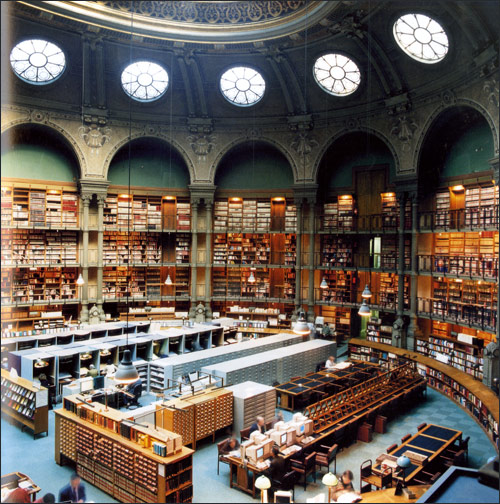
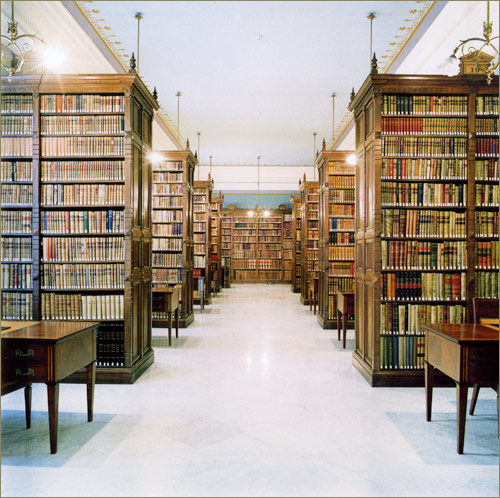
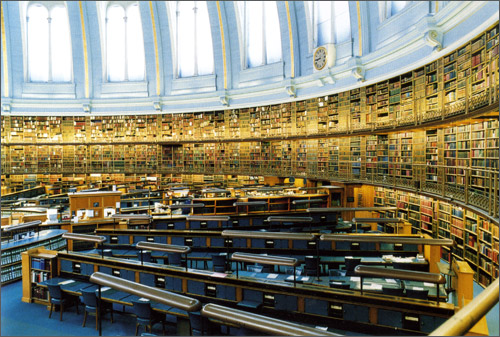
Now, coming upon this post as you are, unawares, I feel I ought to clarify the title (which was alternately going to be sex libris) straight away by telling you what this post is not, in fact, about. By “library smut” I am in no way referring to the photo books on native peoples, or the illustrated health manuals, or any of the other volumes which, in your childhood, you lurked about the library aisle to find with the sole purpose of sneaking guilty glances at naked bodies. Nor am I referring to the “risqué” novels by Miller, Cleland, Réage, or Lawrence you leafed impatiently through as a teenager. No. What I’m talking about here is the full-frontal objectification of the library itself. Oh yeah.

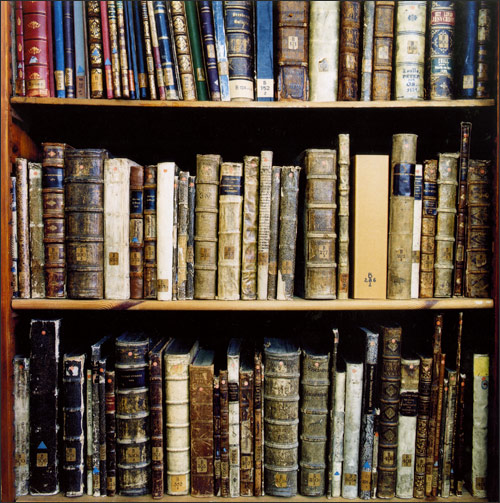
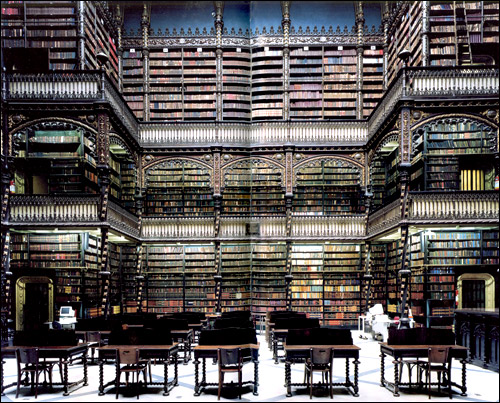
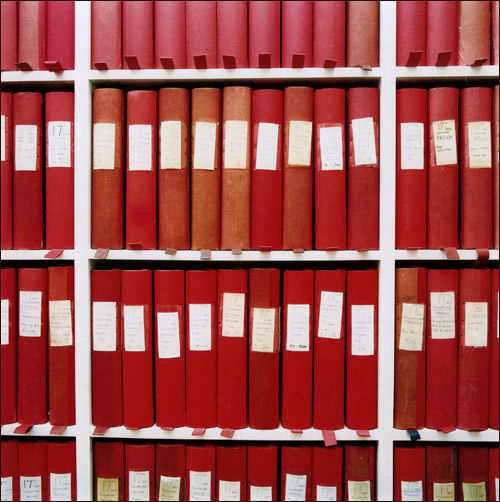
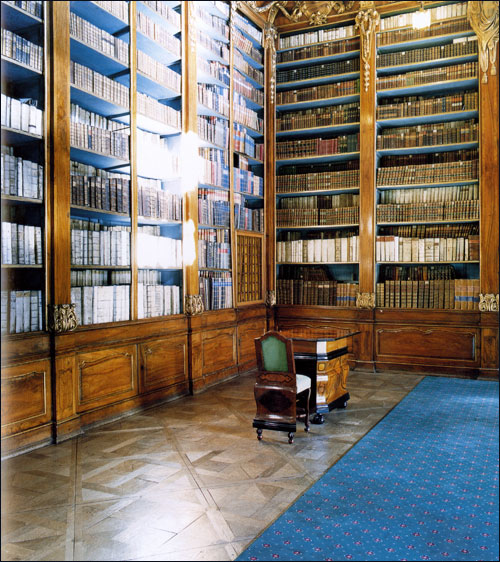
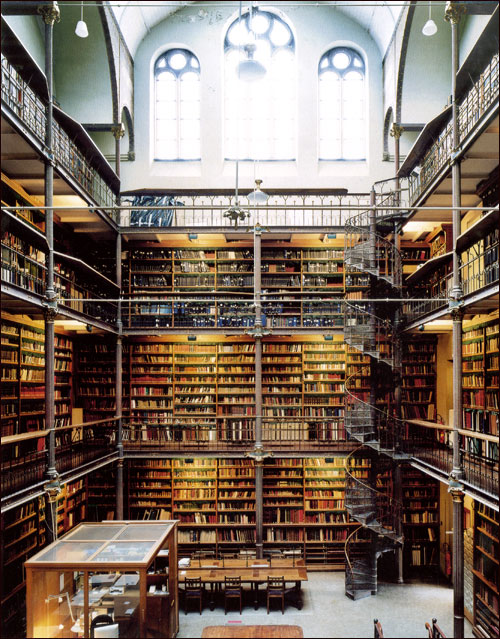
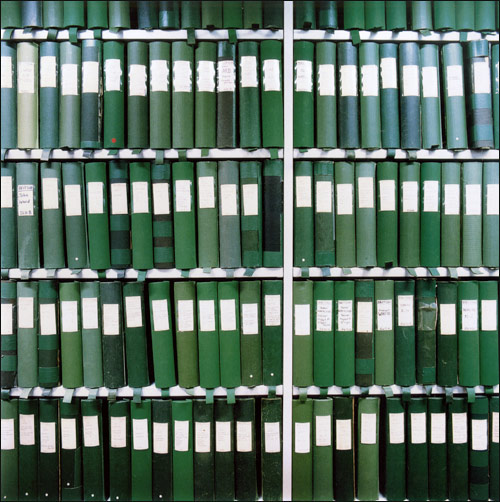
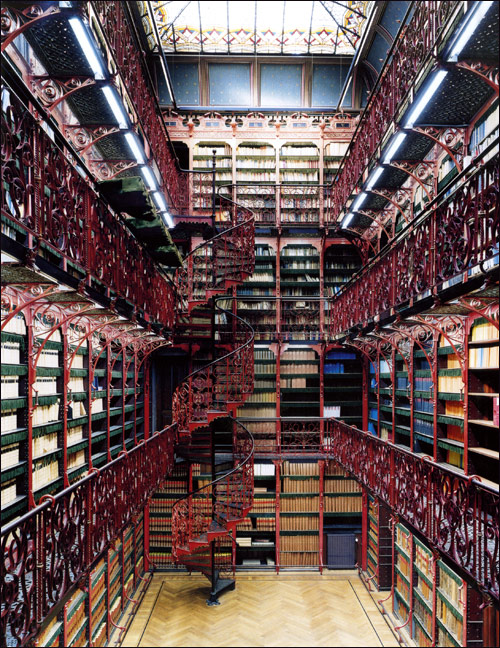
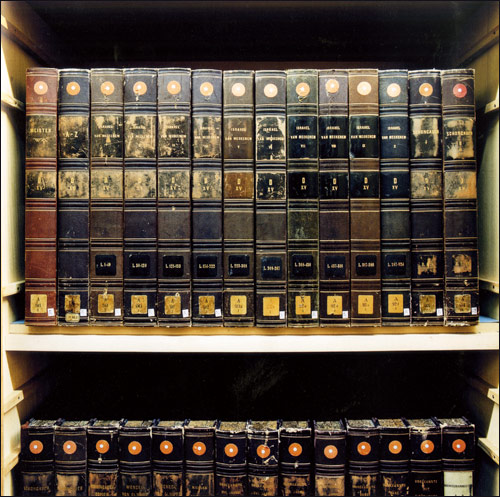
Yesterday I came across a truly gorgeous book of photographs by Candida Höfer titled, Libraries, a title which pretty much says it all, because that is just exactly what it is, one rich, sumptuous, photo of a library interior after another. It’s like porn for book nerds. Seriously. They are gorgeous photos, nearly all without visitors and just begging to be entered. (ha. sorry.)

See below for 14 examples which I particularly liked, but keep in mind these 500px wide version can’t really compete with the big, glossy, real thing.

BNF PARIS


BIBLIOTECA DE LA REAL ACADEMIA DE LA LENGUA MADRID


KUPFERSITCH-KABINETT DRESDEN


BRITISH LIBRARY LONDON


REAL GABINETE PORTUGUES DE LEITURA RIO DE JANEIRO


CONWAY LIBRARY LONDON


STRAHOVSKA KNIHOVNA PRAHA


RIJKMUSEUM AMSTERDAM


WITT LIBRARY LONDON


STIFTSBIBLIOTHEK ST. GALLEN


HANDELINGENKAMER TWEEDE KAMER DER STATEN-GENERAAL DEN HAAG


KUPFERSTICH-KABINETT DRESDEN


STIFTSBIBLIOTHEK KLOSTERNEUBURG


TRINITY COLLEGE LIBRARY DUBLIN


Hope you enjoyed… but not too much… you filthy, beady-eyed perv.

You can pick up your own copy here.
(I’m sure they will ship in a plain brown paper-bag if you ask really nicely.)

Alternately, since I didn’t offer much by way of reading in this post I offer the following supplimentary material:

The obligatory Wiki round-up on the subject.

A history of private, royal, imperial, monastic and public libraries

Survivor: The History of the Library from History magazine.

Libraries & culture from University of Texas Press.

And hell, though it’s only tangentially related The Briar Press page:
Eleven Presses That Made History (Via.)

Saturday, September 05, 2009

Reading Underground

Ruth Fremson/The New York Times

A CITY RITUAL Austin Ferrier, on his way to work, reads Graham Greene’s “The Quiet American” on the B train.

Published: September 3, 2009

THE middle-aged woman with the black cardigan around her shoulders had assumed a meticulously calibrated posture: feet shoulder-width apart, arms slightly bent, fists loosely clenched, muscles relaxed yet alert.

She was not preparing for a tae kwon do bout, but performing her personal version of the underground battle engaged in daily by millions of New Yorkers: reading, intently, on a sardine-can D train hurtling swiftly toward Brooklyn in the evening rush. Without holding on.

“I am a New Yorker,” the woman, Robin Kornhaber, 54, told me as if those five crisp words explained everything. “I can do anything on the subway.”

Reading on the subway is a New York ritual, for the masters of the intricately folded newspaper like Ms. Kornhaber, who lives in Park Slope and works on the Upper East Side, as well as for teenage girls thumbing through magazines, aspiring actors memorizing lines, office workers devouring self-help inspiration, immigrants newly minted — or not — taking comfort in paragraphs in a familiar tongue. These days, among the tattered covers may be the occasional Kindle, but since most trains are still devoid of Internet access and cellphone reception, the subway ride remains a rare low-tech interlude in a city of inveterate multitasking workaholics. And so, we read.

Even without a seat, even while pressed with strangers into human panini, even as someone plays a keyboard harmonica and rattles a cup of change, even when stumbling home after a party.

There are those whose commutes are carefully timed to the length of a Talk of the Town section of The New Yorker, those who methodically page their way through the classics, and those who always carry a second trash novel in case they unexpectedly make it to the end of the first on a glacial F train. There is a lawyer from Brooklyn who for the past two months has catalogued what she and other commuters are reading on a blog, “The Subway Book Club,” and a student at the New School who spent the summer passing out 600 donated books to subway riders to spread her passion for reading.

And then there are those reading the readers, imagining their story lines. That man in a suit studying “Rosetta Stone Level 3 Italian” on the No. 2 train must be preparing to meet his fiancée’s family in Tuscany. The woman reading a young-adult novel at 81st Street is probably a teacher preparing for class. We are usually left to wonder, but I recently spent 12 hours crisscrossing four boroughs underground, asking people what they were reading and why.

Bob Alderson, 46, the man learning Italian, is a patent lawyer, with no imminent overseas travel plans, but aspirations. “Someday I want to visit Italy, so I’m studying,” he said.

And the woman reading “City of Glass,” an urban fantasy involving a slavering demon and several warlocks? Kimberly Nessel, 26, a dog walker with a graduate degree in forensic psychology, said she became addicted to young-adult fiction with dark plot lines when she worked in a bookstore.

JUST BROWSING

C train at 135th Street, 9:30 a.m.

The blue bag balanced on her lap was packed full of health care administration textbooks and homework, but Deborah Hairston, who works in the cancer unit at NewYork-Presbyterian/Columbia hospital was using her commute to peruse the catalogs that stuff her mailbox each week.

“Sometimes I find things I want to buy, but most of the time I am just browsing,” she said, paging past a display of bead-embellished Chadwicks cardigans. “I don’t want to read the news or get involved with anything too heavy. I have enough of that in my life.”

A PAGE A DAY

B train at 96th Street, 10 a.m.

To learn the Talmud, many of its students read one of its 2,711 pages each day. And it helps to have a chevruta, or study partner. Harry and David Zinstein, brothers from Washington Heights, generally conduct their Daf Yomi — page of the day, in Hebrew — study sessions en route to work on the Upper West Side.

Except on Wednesday, which turns out to be a kind of day of rest for Harry, the elder of the two Zinsteins at 28. A manager at Mike’s Bistro, a kosher restaurant on West 72nd Street, Harry Zinstein forgoes his subway Talmud study those days to read the Dining section of The New York Times.

“It’s the only thing I read on the train except for the Talmud,” he said, his thick, leather-bound Babylonian text tucked inside his messenger bag for later consumption. “And it’s the perfect length for the commute.”

David Zinstein, 19, who is studying in Israel but spent the summer working for his brother, sat to the right, reading his Aramaic tractates (with English translations). “I always read the Talmud on the subway,” he said. “Even on Wednesdays.”

MULTITASKING

A train at 23rd Street, 12:30 p.m.

Donalay Thomas is the kind of reader who creates a private space for herself among the multitudes, whether she is squashed by the door or has a whole row of seats to herself. With her iPod earbuds firmly in place (“On the Ocean,” from an R & B album by K’Jon) and a thick hardcover (“Resurrecting Midnight,” by Eric Jerome Dickey) open on her lap, Ms. Thomas, head down, can zone out and leave the world behind.

“I always listen to music while I read on the train because it sets the mood for me to get lost in the author’s plots,” said Ms. Thomas, 21, a model in between jobs who lives in Englewood, N.J., and was headed to West Fourth Street for an afternoon of skateboarding. “I can become one of the characters that I’m reading about.”

She does not, however, get so lost in her books that she loses touch with fellow passengers. “I’ll ask other readers if they’re enjoying a book I’m familiar with,” Ms. Thomas said.

Then she turned to a woman across the aisle. “Your stop is next,” she said, proving that she had been paying a little bit of attention to everything all along.

SUBWAY AS STAGE

B train at 42nd Street, 1:30 p.m.

If every restaurant in New York employs at least one actor, then every subway car seems to carry at least two — rehearsing for a part, or just daydreaming about one.

An actress named Rachel, who is 25 and wore dark sunglasses that may or may not have been helping her get into character, was in from Los Angeles, with several auditions lined up, including one for the part of Sosa in “The A-Team,” a movie remake of the 1980s television series. “Sosa is an aide to the secretary of defense,” she explained. “I am trying to channel her. She is sexy, but official.”

Across the aisle, James Wright, 31, was dressed casually, sitting beneath a dark suit and starched white shirt on a hanger. On his way to an audition for a soap opera, “As the World Turns,” he was reading Arthur Miller’s “Death of a Salesman” — he aspires to play Biff some day — to warm up.

A few minutes later, another actress, Angelica Ayala, was gesticulating forcefully and mouthing the words to her part, a woman with multiple names and personalities. Ms. Ayala, 45, made no apologies for her theatrical display.

“I just have to do what I have to do,” she said. “People might stare, but I need to rehearse.” Her play, “Peccatoribus,” was being staged at the Pregones Theater in the Bronx.

“It’s a play about war and fighting for yourself,” she said.

WRITING, TO READ LATER

N train at 59th Street, 4 p.m.

Having finished “The Nimrod Flipout,” a book of short stories by the Israeli writer Etgar Keret, on her morning commute, Alysia Vallas, on her way home to the Upper West Side, pulled out the journal in which she had been recording a summer’s worth of impressions of New York.

“I generally write little vignettes about daily occurrences I’d like to remember,” she said. “Strange places I’ve visited, people who have caught my eye on the subway, things of that nature.”

The journal, a patterned hardcover, also includes carefully drawn tables and notes on guitar chords she researched at the New York Public Library.

Ms. Vallas, 21 and a student at Grinnell College in Iowa, spent the summer as an intern at the Queens Library HealthLink. She said she typically used her train time to read or write.

“It’s the one the time of day that you have completely to yourself with no sort of immediate obligations, unplugged,” she said. “Although you’re surrounded by people, the anonymity is really forgiving.”

READERS IN TRAINING

2 train at 42nd Street, 5 p.m.

The day-campers from Tremont United Methodist Church in the Bronx, ages 5 to 8, were exhausted. They had been going full speed with activities since 7:30 a.m., including a field trip to the New York Hall of Science in Queens.

Waiting on the platform at Times Square, the children plotted how to score a coveted rush-hour seat, planning who would sit on whose lap if the options were scarce. Hands were held tight, and two of the youngest girls rested their heads against each other’s for a moment.

As the train pulled into 42nd Street, Jesus Figueroa, a Tremont counselor for six summers, readied the campers to board: “Get your books ready.” An explosion of titles — “Jig and Mag,” “A Rose, a Bridge, and a Wild Black Horse,” “The Kid Who Invented the Popsicle” — were pulled from backpacks.

According to a church rule, Tremont campers must read whenever they win a seat on the subway. Each day, campers select a book from the church library or bring one from home. They practice reading in short increments — 20 minutes here and there — and keep reading journals to document their progress.

“The books keep them occupied while they ride and help them stay on point with their reading skills,” said Mr. Figueroa, 20.

On the train, even campers who had to stand took to their books. An 8-year-old named Christopher used both hands to hold “Time Together,” supporting himself by twisting one of his black Nike Shox around the pole behind him. Next to him was Steven, also 8, who cracked open “50 Simple Things Kids Can Do to Save the Earth” with one hand and held on to a counselor with the other.

With an index finger following the words on Page 4 of “Mary Anne to the Rescue,” a book in the Baby-Sitters Club series, 8-year-old Laronda perched intently on her seat between two men scanning newspapers. For a moment, she looked up to offer an assessment of the task at hand. “This is a lot of work,” she said, “but it’s fun.” And then she turned back to the book.

JOINING THE CLUB

D train at Grand Street, 5:45 p.m.

Fellow passengers would probably never suspect that Carlton Clarke, standing in the middle of a crowded car, was consumed with the ramblings of a disaffected teenager.

With a logo bag from the accounting firm where he works slung over his shoulder and a stack of papers bound by a black clip balanced on his left palm, Mr. Clarke appeared to be taking his work home with him to Brooklyn.

But he was, in fact, three chapters into J. D. Salinger’s “Catcher in the Rye,” a copy of which he had printed from a downloaded version circulating around his office book club, which meets weekly and turns 50-somethings like Mr. Clarke into armchair literary critics.

“I’m only part of the way into this book, but I already have questions about where it could be going and whether or not it can get there,” he said, bracing himself as the train lurched across the Manhattan Bridge.

In recent months, the book group has read the first and second installments in Art Spiegelman’s “Maus” series. “That was a different kind of reading experience because they are graphic novels,” Mr. Clarke said. “I had never been exposed to that genre before.”

As for “Catcher in the Rye,” Mr. Clarke could not remember whether he had read it before. “Maybe I did, in school, but either way, this is different,” he said. “I definitely never read it on the subway before.”

MEDITATION IN MOTION

7 train at Queensboro Plaza, 6:15 p.m.

On a crowded car hurtling toward Jackson Heights, Panee Ma was immersed in a solitary pursuit, radiating monklike calm.

For two years, Ms. Ma has used her round trips from Queens to the garment district, where she spends long days applying intricate beading to clothing by hand, to read “The Wisdom of the Lotus Sutra,” a six-volume Buddhist literary masterpiece. And here she was, on a warm Wednesday evening, most of the way through her last book.

Ms. Ma, 68, a native of Korea who came to New York in 1981 via Thailand, speaks in heavily accented English. Her reading goal is simple: “I am learning through these books to become a better human being and get better at English.

“I try to improve myself every day,” she added, thoughtful about the necessity of combining her spiritual life with the grime and noise of the subway. “I am trying to learn to live life as a Buddha. I don’t want to waste any time.”

An earlier version of this article misidentified the state in which Grinnell College is located and misstated part of the title of the Eric Jerome Dickey book being read by Donalay Thomas.

Monday, August 31, 2009

Tiny librarian is hell on wheels

By Jim Kavanagh

(CNN) -- She's petite, she's middle-aged, she's bookish, and if she gets a chance, she'll knock you on your keister.

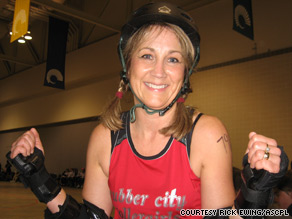
Librarian Beth Hollis gets ready to rumble in her Rubber City Rollergirls gear.

Librarian Beth Hollis gets ready to rumble in her Rubber City Rollergirls gear.

Click to view previous image
1 of 2
Click to view next image

By day, she's Beth Hollis, a 53-year-old reference librarian in Akron, Ohio. By night, she's MegaBeth, an ageless dynamo on the roller derby rink.

"All my life, when I tell people I'm a librarian, they say, 'You don't look like a librarian,' " Hollis said. "And now that I'm a roller derby girl, they say, 'You don't look like a roller derby girl, either.' So I don't know where I fit in."

Hollis has been fitting in at the Akron-Summit County Library for 27 years.

"She's my hero," said Diane Barton, 48, who has worked with Hollis at the library for 18 years. "I just think it's so cool she's doing something so different and so active and so aggressive. You know how we are. We're librarians, so we tend to have that meek and mild stereotype." Video Watch her in action as Beth and MegaBeth »

Before discovering roller derby, Hollis had been casting about for a hobby.

"I tried knitting and literally got kicked out of the knitting class for just not being able to get the hang of it," she chortled. "I guess it was just too soon for me to try knitting. I needed something that maybe was a little bit more physical for a hobby."

Boy howdy.

She visited a Rubber City Rollergirls practice last winter after telling her husband, Warren, a retired high school math teacher, that she was going to an audition.

"At that point, I just said, 'I don't care that I have an AARP card in my wallet; I'm going to go for this,' " she said.

Roller derby is a real sport, having ditched the campy, WWE-like spectacle seen on TV in the early 1970s. The Rubber City squad practices six hours a week and competes against teams in Ohio, Michigan, Indiana, Pennsylvania and Kentucky.

Roller derby explained

Roller derby isn't as confusing as it first appears. Two teams of five players each line up on the oval track. Four are blockers, whose job is to knock down or otherwise impede the opposing players and to open the way for the fifth teammate, called the jammer, to make her way around the rink. The jammer scores a point for every opposing player she passes. If she laps everyone, she earns an extra point for her team. Each round, or jam, lasts two to three minutes or until the lead jammer calls it off. The teams play two 30-minute halves, and the team with the most points wins. Quirky uniforms and tough-chick nicknames add to the fun.

A roller derby match, called a bout, consists of two 30-minute halves. Each team has four blockers and one player called a jammer, whose job is to get past the other team's blockers on a 235-foot oval flat track and lap them to score points. Both teams are on offense and defense simultaneously, and the action is fast and rough.

"I think she's awesome," coach Brian "Coachise" Phillips said. "She is 53, so she is our oldest girl on the team, but she works every bit as hard as every other girl on the team, and she is in as good a shape if not better than every other girl on the team."

And she's an inspiration to the other players.

"It makes me actually excited to think that I could play ... for another 30 years, and that's awesome for me, because this is like my favorite thing to do," said Barb "Barbonic Plague" Brown, who at 21 is the youngest player on the team.

Hollis has earned the respect of her team captain, too.

"She's so tiny -- she's probably like 5 feet 4 and maybe 110 pounds or so -- but when she's out there, she's MegaBeth," said Tracy "Eighty-SixHer" Soulsby, 40. "I wouldn't say she's a very hard hitter, but she's a good blocker. Her strength is getting in people's way and then keeping them behind her, not letting them get around her."

The MegaBeth legend grew during a June bout with the Glass City Roller Girls, a team from Toledo, Ohio. Hollis found herself contending with a 6-foot-1, 220-pound foe who goes by the name Pamazon.

"Out of the corner of my eye, I saw her just take out this one girl, and I remember, the crowd just went wild. It was fantastic!" Brown recalled.

"I think that might be the highlight of her season," Phillips said.

For her part, Pamazon -- aka Pamela Keppler -- said she's never been knocked down in a bout.

"To be completely honest, I don't remember MegaBeth that well from the bout," she said. "I do remember talking with her at the after-party. We were all pretty surprised by her age, and I remember her saying that I knocked the snot out of her."

The team draws capacity crowds of 500 to 600 at its bouts, where admission costs $8.50 to $12.50 and concessions are sold.

"It really makes it exciting when you've got all those people cheering," Hollis said. "And as we progress through the season, it's obvious that we've gotten better ... and the fan support has just gotten louder."

But the glory comes at a cost. Two Rubber City Rollergirls have suffered broken legs -- in practice! -- and one is about to return after breaking her shoulder and nose in a bout.

"It's inevitable that you're going to get scrapes; you get rink rash and bruises," said Hollis, who wears number 796.21 -- the Dewey Decimal library index number for skating.

"I took a pretty tough fall to my hip that had me a little concerned. As I said to my teammates, at my age when you break a hip, it's the beginning of the end."

Asked whether she has hurt anyone else, the mother of two college graduates replied furtively: "I hope so."

Librarian Hollis isn't the only player smashing stereotypes. Among her teammates are teachers, a Starbucks manager, an accountant, a nurse practitioner, a barmaid and a couple of waitresses, most of whom are on the small side, Soulsby said.

"It's not just rough-and-tough, big, burly gals out on parole," Hollis said.

Perhaps just to keep it real, the team does include one former repo driver (Valcano) and a heavy-equipment operator (BulldozeHer Bo).

Barton, her fellow librarian, says there's something different about Hollis since she laced up her skates.

"It may just be my imagination, but she seems more confident in a way," Barton said. "It has to empower you somehow."

advertisement

Hollis says it's good for people to test themselves with change.

"I encourage people to pursue things -- something like this -- that they think might be fun, and not to let stereotypes get in the way of whether or not they think they're going to fit in," she said. "Because you never know."

Friday, August 28, 2009

As Layoffs Loom, Broward Librarians Turn on One Another

Posted by

One Broward County Library worker told Juice of a recent conversation she had with a coworker claiming immunity from the scourge. "I'm not worried about getting laid off," the librarian allegedly boasted. "I have seniority." And in a disclosure she may have regretted, the librarian said that she had retired last year after some three decades of service, triggering her pension, only to be rehired so that she still collects a wage.

"This pissed me off," said her fellow worker, who asked to remain anonymous. "She's getting her retirement and still working while other people who have been here seven or ten years are worried for their job."

Full story here.

50 Exercises You can do at the Library (Without Looking Foolish)

From: http://accreditedonlinedegrees.org

With library shifts easily running eight hours and over, does that time have to be wasted sitting or stacking books? The short answer is “no.” The long answer is: “check out these top 50 exercises you can do at the library, office, or just about anywhere.”

Best Desk Workouts You Can do at the Library

Get the most out of your desk time by trying out these highly recommended, expert exercises.

1. 15- Minute Desk Workout: Coach Nicole is a top expert at SparkPeople, a popular dieting and fitness site. In this short video, she shows you how to workout using items found around any office. A series of ten exercises work all your major muscle groups and end with seated stretches for the deskbound exerciser.

2. Best Exercises to do at Your Desk: “Forbes” magazine shows you how to work out at your desk. There are even tips on simple things you can do to have a healthier day. There is also a picture gallery of the best desk exercises.

3
. Top to Bottom: Expert trainer Jillian Michaels has appeared on “The Biggest Loser.” In this three minute video, she shows you how to get a complete body workout with a few spare moments and free weights. Worth a look for its ability to workout multiple parts at the same time.

4. Dynamic Sculpt & Stretch: Natalie Yco shows you her professional 10 minute workout to work the entire body. It hits all five major muscle groups and follows up with stretching. Free weights are the only thing you need.

5
. How to Work Out at Your Desk: MSNBC offers this simple guide to doing just that. Get instruction on the forearm stretch, finger pulls, neck stretch, tendon glides, and the chest stretch. There are also other related links.

6. Desk Workout: Gay Gasper shows you this mini desk workout. In just three minutes, learn a few exercises you can do at any work place. These simple kicks can even be done under a desk without anyone ever knowing.

Best Cardio Workouts You Can do at the Library

If you have a closed space or some free time, check out these workouts to get your heart going and those calories burning.

7. Jump Start Cardio Workout: Coach Nicole guides you through this ten minute workout. Simple cardio exercises are done without the need for equipment. It contains a warm up, workout, and cool down.

8. Cardio Sculpting: This ten minute cardio class will challenge you to work cardio intervals, alternating high intensity drills with short recovery breaks. You’ll sweat, jump, lunge, and even increase your flexibility in minutes. Watch for free or download for $1.99.

9. Bootcamp Calorie Burn: Why pay tons of money for a bootcamp workout when you can train as they do in 30 minutes for free? Kendall’s dynamic moves will get your body pumping in this calorie blasting workout. You just need a small space and a will to work.

Best Pilates Workouts You Can do at the Library

Because they require a small space and little to no equipment, Pilates can be done from any small space, such as an office.

10. Intro to Pilates: In this short video, Coach Nicole explains seven principles that will prevent you from making some common mistakes. Watch so that you can get the most out of your Pilates workouts. Posture, breath, and more are discussed.

11. 10-Minute Pilates Hips & Thighs Workout: This workout will help you strengthen your hips, glutes and thighs. Coach Nicole takes you through one short set of six Pilates exercises. Stretches are also included.

12. 20 Minute Power Pilates: Jessica’s routine will spark up every muscle in your abs, back, legs, hips and arms, while lengthening these muscles and joints. Her clear cues will ensure you get the most out of some classic Pilates moves. Ease back pain and achieve perfect posture to help you look pounds lighter. The preview is free.

13. Less is More Pilates: This video teaches you the fundamentals of controlled movement so you can get the benefits of your practice in the quickest way possible. Lizbeth shows you the routine, needing only a fitness mat. It is also optional if you have a carpeted floor.

14. Desk Pilates: Complete Workout: Pilates instructor Eleanor Gomez demonstrates a simple workout that will help prevent repetitive strain injury, strengthen your spine, and make working easier. Available at Bnet. There are also other related videos in the article.

15
. Pilates Power: Take your Pilates up a notch with this twenty minute video. Jessica’s powerful routine will spark up every muscle in your abs, back, legs, hips and arms. She also shows you how to lengthen these muscles and joints to give you a long, sleek dancer’s body.

Best Stretches You Can do at the Library

Because injuring yourself is one of the best ways to look foolish, try out these stretches to minimize risk and get the blood flowing.

16. Seated Stretching Routine: This short articles shows you seven stretches that reduce stiffness and tension. They include the neck stretch, triceps, shoulders, and more. There is also a reference guide to stretching.

17. Football Flexibility: Rich Tuten works with the Denver Broncos and shows you how to stretch. Simple moves can be done anywhere with no equipment. Avoid injuries and adapt to any workout with this routine.

18. Running Flexibility: If you’re going for a run during your lunch break, check out this video to make sure you warm up properly. A few simple stretches are shown. Use for before and after a run.

19. Lower Body Stretching: This routine can be done completely standing up with no equipment. Six stretches target thighs, quads, hamstrings, and calves. Proper breathing is also shown.

20. Rhythmic Stretch: Get a groove going while you stretch in this video. Desiree shows you easy and fun ways to stretch. This simple routine will make you feel rejuvenated and radiant afterwards.

21. Upper Body Stretches: This short video begins with a shoulder roll. Another six stretches are shown in the three and a half minute video. Areas stretched include arms, chest, back, and neck.

Best Ab Workouts You Can do at the Library

Be the only one in the library wearing a cut off after taking on these challenging, yet rewarding, exercises.

22. Abs and Chest Combo Exercise: “Men’s Health” shows you this exercise in a short video. Simply choose MH Minute and Fitness to select. It involves an exercise ball and a few reps.

23. 12-Minute Pilates Abs Workout: This workout will help you strengthen your abdominals, obliques, and lower back. Coach Nicole takes you through one short set of eleven Pilates exercises for a complete core challenge. No equipment is needed.

24. Sculpt Abs on the Field: If you have a small grassy area outside of your library, give this workout a try. It is the same one professional baseball players use. A sprint and cardio drill help sculpt abs.

25
. 10-Minute Crunchless Core Workout: No need for crunches or an exercise ball to do this workout. It strengthens abdominals, obliques, and lower back.

26. Rock Solid Abs: This plan hits your entire core–not just your abs but the muscles that support the spine. Moves can be done freestyle, with a weight, or exercise ball. You can even download the entire thing to your iPod.

27. Get A Flatter Belly: The experts at “Women’s Health” magazine show you four essential workouts for your core. Complete three circuits, resting for 45 seconds between each. Do the workout two or three nonconsecutive days a week.

Best Butt Workouts You Can do at the Library

Face bikini season head on or look great in those jeans with the help of these workouts

28. Butt Blasting Workout: If you’re tired of performing endless squats, then this short, focused workout is for you. These exercises target the gluteus maximus to retain strength and muscle tone. After six minutes of these targeted exercises, you will feel the burn and notice tighter and firmer muscles over time.

29. Butt Workout: Do these moves twice a week to complete this glute camp. There are videos of each move. You can also get a printable version of the workout.

30. 5-Minute Booty Workout with Ball: If you have an office, an exercise ball, and five minutes, this workout is for you. Use this short video to tone your butt and thighs without lunges or squats. The exercises target the gluteus maximus to retain strength and muscle tone.

31. Sculpt Your Butt: Stop by here to get a workout for both your butt and your legs. Five moves are done freestyle or with a stepper. Not only does it build muscle, but it burns calories as well.

32. Booty Burn: In just ten minutes, you’ll zap calories while lifting and tightening your glutes. Cindy increases your strength, power, and heart rate all in one. You’ll maximize your leg strength and boost your glutes and hamstrings.

Best Arm Workouts You Can do at the Library

Whether looking to lose the waddle or tone up, these short, free workouts will have your arms sculpted in no time.

33. 7-Minute Seated Band Resistance Workout: In this workout, Coach Nicole will lead you through a series of upper body exercises that you can do anywhere. Only a resistance band and a small space are needed.

34. Upper Body Towel Workout: Grab a towel and a few minutes to do these challenging arm workouts. Three moves are shown. They include two varying pushups and a towel crunch.

35
. Arms Workout: These three moves can help you sculpt sexy arms. Three simple moves use only free weights. Complete two or three sets two days a week to get results.

36. Super Shoulders: In one and half minutes, Jillian Michaels’ shows you how to sculpt your shoulders. You only need free weights. Three advanced exercises are shown.

37. Armed and Dangerous: This Jillian Michaels mini workout is targeted for the arms, but works other areas, too. Free weights and jump rope mime are shown. She also gives recommendations on reps.

Best Leg Workouts You Can do at the Library

Don’t ignore your lower body. Try these workouts to get legs to match your arms.

38. Calf Raise With Hop: This exercise is a twist on an old classic. Do with or without a weight depending on your level. A hop is added for better results.

39. Single Leg Squat: For advanced exercisers, this can be the ultimate leg and lower body workout. Muscles, hips, and even posture are challenged. If you can do ten, try adding a pillow underneath your foot.

40. 10 Minute Buns & Thighs: Cindy shows you how to shape the lower body in just ten minutes using no equipment. Several simple exercises will have you feeling the burn in no time.

41. Lean Men Leg Workout: In a little over two minutes Jillian Michaels shows you how to get ripped legs. She shows you the plie, courtesy, and more.

42. Gold Medal Glutes and Legs: Wonder how Olympians work their lower body? Then try these creative and challenging body toning exercises. They will shape your glutes, hamstrings and the smaller muscles surrounding the glutes you need to get the smooth lines of an athlete.

Best Specialty Workouts You Can do at the Library

If you’re looking for something specific, or just a fun workout, try one or all of these mini workouts.

43. Kickbox Workout: Someone making fun of you for working out at the library? Then challenge them to this routine by trainer Amy Dixon. She’ll show you how to perfect your technique for maximum calorie burn.

44. Jump Rope Workout: Coach Nicole again shows you how to do a simple, ten minute workout using only a jump rope. This high intensity workout blasts calories. It can also be done without a jump rope.

45. Agility Workout: Afraid of looking foolish during these workout routines? Then try this 20 minute workout to make you both graceful and toned. Seven different moves use free weights, a basketball, and stepper.

46. Pylo Power: Jillian Michaels’ shows you how the power of jumping can workout your entire body. 180 jumping, the speed skater, and more are shown. She also tells you how many reps to do of each.

47. Kettlebell Workout: It’s basically a medicine ball with a handle attached, but it can tone your entire body. Missy Beaver, a Los Angeles trainer, created a twice-weekly routine that you can do at home. Four steps are shown in diagrams.

48. The Shim Sham Workout: If your library will let you take a ten minute hula hoop break, check this video out. Kelee shows you how to use one to get a fun workout. Hula hooping knowledge is required.

49. Fighting the Freshman 15: Not just for college students, librarians can get it too. Teri shows you body sculpting exercises that are meant to be performed in a small space. This fitness program was specifically designed for coeds by an instructor who has been there and done it herself.

50. Exercise Office Ball Chair: Lifehacker tells you how to use an exercise ball at your desk. It lists the pros and cons. If you are still on the fence, read the 50 comments left by various readers.

Libraries are often seen as dull, droll places with out of shape workers. It doesn’t have to be with the help of these 50 exercises you can do at or around the library. Make sure to consult a physician before beginning a workout plan.

Nominate Your Favorite Librarian of 2009!!!


Librarians in our nation’s 123,000 libraries make a difference in the lives of millions of Americans every day. Now is your chance to tell us why we should shine the spotlight on a librarian at your public, school, college, community college or university library. Nominate your librarian for the Carnegie Corporation of New York/New York Times I Love My Librarian Award!

Up to ten librarians will be honored. Each will receive $5,000 and be recognized at an awards ceremony hosted by The New York Times at TheTimesCenter in December 2009.

Nominate a librarian in one of three categories: public librarians; school library media specialists; or college, community college, or university librarians.

Nominations close Oct. 9, 2009.

All winners will be announced in early November.

From: www.ilovelibraries.org

It's hip to be a librarian

From: http://www.mb.com.ph - By RACHEL C. BARAWID

August 27, 2009, 8:56am

Librarians are old-fashioned boring nerds, unapproachable old maids or widowers -- not!

Today’s new breed of librarians have broken free from those dank and dusty school libraries, the century-old stereotypes, and have evolved into dynamic, progressive and most-sought after career people employed by large corporations, IT comp anies, hospitals and law firms.

Yes, a librarian can now be anyone -- from your cute neighbor or cool classmate, to that sophisticated babe or handsome hunk. Or better yet, he can be a multi-talented computer expert who is into flip spin, poi, fire breathing and photography such as Johann Frederick Cabbab, a professor of Library and Information Science (LISIS), at the University of the Philippines in Diliman.

A licensed librarian, the 36-year-old Cabbab admits he first settled for the LIS course after shifting from Accounting. A constant member of the library club in elementary and high school, Cabbab took interest in developing databases, one of the tasks of a librarian.

“When you talk of a librarian in this time and age, malawak na yung meaning. Many still land in the library but today, you can be a librarian in a virtual environment. You can be working in a publishing company and use your librarian skills such as journal indexing, abstracting and classifying.

I think that’s our advantage. We know how to classify. There’s a lot of difference from a librarian and non-librarian working in a database company,” explains Atty. Vyva Victoria Aguirre, dean of the UP School of Library and Information Studies and legal consultant of the Office of the Vice-Chancellor
for Research and Development.

Atty. Aguirre says in fact, librarians are among the most in demand professionals today. Many of them land in big corporations, schools, universities, big law firms, IT companies and hospitals.

“Everyday, I get a call or email from big corporations and schools asking for LISIS graduates that I can recommend. In the US, the trend now is clinical librarians accompany doctors in hospital rounds and sit with them in medical conferences to find out their needs. The same with law librarians who help lawyers gather evidence,” reveals Aguirre.

INFORMATION EXPERTS

When it comes to searching, managing and giving out information, librarians are also the most credible, says Aguirre.

Yes, in this age of information explosion, it may be easy to look for, download and cut and paste information using search engines. But the veracity of the information still has to be confirmed as the Web is not exactly an untainted source of information.

“Librarians have certain criteria for evaluating authoritativeness. We try to find out who is making this definition or where did it come from? Who is the author, the publisher? We are trained for this and we really go out of our way to decipher any information we get,” she points out.

Cabbab adds that librarians take the pains of searching, mostly thru scholarly journals, to look for specific subjects that cannot be answered by just Googling.

NO MORE GATHERING DUST

As LIS students continue to equip themselves with the necessary skills to become competent and competitive, they have also begun to adjust to a new paradigm shift that responds to the needs of the times.

“The information infrastructure has pushed Library Science to shift its paradigm from a librarian’s role of preserving, to that of servicing. You don’t care too much anymore if the books are lost as long as they are being used. You would rather lose them than keep them gathering dust on the shelves. From a warehouse mentality, a library has now become more like a supermarket for everyone to see, touch and get what they need. Hindi na tinatago ang mga books,” reveals Atty. Aguirre.

She says librarians are also gearing towards a hybrid library. Aside from the printed material, they also build on their electronic collection either through CDs, tapes or whatever storage accessible through the web. Libraries now subscribe to online journals. An Online Public Access (OPAC) system is now slowly replacing the old catalogs.

Librarians, adds Aguirre, have also started marketing the library as well as themselves.

“Before people will come to the library whether they want to or not because they need to. But now they can go elsewhere for their information needs even if the library has the most authoritative facts. But people don’t know that. So we have started marketing the library by improving its appearance,
and making it more attractive and conducive to learning,” she says.

Librarians are also taught to be more friendly and approachable. They should mingle with faculty members and students and let them know what they can offer.

“Sinasabi ko parati sa estudyante ko na if you get to work in company libraries, you have to exercise leadership and show your bosses that you are not just an additional expense. That you can actually
contribute to profit-making by giving them the info they need to improve their products. You have to be proactive and aggressive,” she stresses.

Libraries in UP, for example, have computers with internet connection and free WIFI for students with laptops. It also has discussion rooms that allow students to have group studies.

GROWING OPPORTUNITIES

When UP first offered LIS as a course in the 1940s, only 50 to 60 students enrolled. In the 70s, the degree became a requirement for those who wanted to work in libraries. At present, LIS averages around 400-500 students every year.

In LIS, students may choose electives which cater to their interest such as law librarianship for those who want to pursue Law, IT or medical and health courses. The next step for LIS graduates is to take the Professional Regulated Commission-organized board exam for librarians.

Graduating student Bianca Baylas shifted from Computer Science to LIS because she sees the career opportunities that it offers.

Senior student Kelvin Samson appreciates the course for its being service-oriented. “It elevates the image of the librarian from a mere keeper of books, to a guardian of information. As a student assistant, ang sarap ng pakiramdam pag nakikita mong nakakatulong ka sa mga kapwa estudyante mo. What more kung licensed librarian na ko, mas marami pa kong matutulungan,” he enthuses.

Graduating student John Eli Casino was attracted by the tracks that the LISIS course offers. He decided to combine law and IT electives to prepare for a new trend – law librarians who are also IT specialists. “It took years for my parents to understand my career move. Sa kanila, pag naging librarian ka walang room for growth. Tatanda ka nang ganun lang din, tiga-ayos ng libro. Biyudo. Tagapagpahiram. Eventually sila rin nakadiscover ng mga opportunities in this profession, and learned to accept my decision,” Casino shares.

LIS graduate Iya Agbon, on the other hand, didn’t expect she would end up having the same profession as the librarian that she was afraid of when she was in high school. “May bad experience ako sa libraries.

Yung librarian namin nakakatakot, naninigaw pag maingay ka. Kahit yung photocopying machine yung maingay akala niya kami pa rin. I also couldn’t imagine myself sitting in the library and immersing in such seemingly boring tasks like cataloging and indexing,” she says.

But later on when she shifted to LIS, Agbon realized that a librarian’s life is actually not confined in the four corners of a library.

“May buhay sa Lib Sci. Hindi totoo na librarian ka lang pag naggraduate ka. Hindi ka limited sa choices mo. You can be a researcher or enter in any other profession that is related to your field. You have an edge compared to other people with your eye for information. You can influence people with your credibility. But you should also be responsible and extra cautious in giving out information which is really sensitive,” she concludes.

Wednesday, August 26, 2009

Wikipedia's Parent Org Gets $2 Million Grant From eBay Founder

Posted by

The Omidyar Network, eBay founder Pierre Omidyar's philanthropic and investment organization, announced today that it will give the Wikimedia Foundation, parent organization of Wikipedia, a $2 million grant over the next two years.

Full story here.

Friday, August 21, 2009

Library of Congress Staff Target of Threats

Former Army reservist Lynndie England, a symbol of the Abu Ghraib prisoner abuse scandal, was set to discuss her biography Friday at the Library of Congress as part of a veterans forum on Capitol Hill, but her lecture was canceled after several staff workers received threats, according to the Associated Press.

More here.

She Wanted To be a Librarian, But She'll Have to Settle for Being a Star

posted by

Jennifer Garner tells Oprah Magazine, that when she was a young’n growing up in West Virginia she always wanted to be a librarian.

“I had a very rich imaginary world,” said Garner, who is 37. “And my dream was to grow up to be a librarian, because I had a librarian named Mrs. McCann who I thought was the most magical woman on the planet. She used to publish little versions of my stories, typing them on manila folders and illustrating them with pictures of me and my teddy bear.”